
Planning an elopement wedding in Canada takes four to eight weeks from start to ceremony, and the seven-step process centers on securing your marriage license, choosing a meaningful location, and coordinating a handful of trusted vendors who understand intimate celebrations. Unlike traditional weddings that demand months of committee decisions and guest-list negotiations, elopements strip away everything except what truly matters: two people, a vow, and a landscape that takes your breath away.
You’re here because something shifted. Maybe it was the third venue tour that felt more like a corporate conference room than the beginning of your forever, or the moment you realized you’d rather invest in a mountain helicopter ride than chair covers no one will remember. The couples who elope aren’t running from celebration. They’re running toward something truer: a morning ceremony on the edge of Lake Louise as the sun ignites the glaciers, a forest clearing on Vancouver Island where only the ravens bear witness, or a lighthouse perched on the Newfoundland coast with the Atlantic crashing below.
The practical questions come fast. How do you make it legal? What if your families feel left out? Can you still have a photographer, or flowers, or that perfect dress? This guide walks you through the complete roadmap, from the legal paperwork that can’t be skipped to the personal touches that transform a simple ceremony into a story you’ll tell for decades. You’ll learn how to communicate your choice with grace, build a timeline that removes stress instead of adding it, and create a day so intentional that every detail reflects who you actually are as a couple, not who a wedding industry thinks you should be.
What You’ll Need to Plan Your Elopement
Before you slip into that dream dress or scout sunrise locations in the Rockies, gather the foundational pieces that will carry you smoothly through every decision ahead. Think of these essentials as your elopement toolkit, the documents, worksheets, and connections that transform a beautiful idea into a legally recognized, flawlessly executed celebration.
Start with the legal paperwork that makes your marriage official. You’ll need valid government-issued photo identification for both partners, typically a driver’s license or passport. Research your chosen province’s marriage license requirements early, as application processes, waiting periods, and expiration timelines vary significantly across Canada. Some provinces allow you to apply online weeks in advance; others require in-person visits within specific windows before your ceremony date.
Beyond legalities, practical planning tools keep you organized and intentional. A budget worksheet helps you allocate funds across photography, travel, attire, and vendors without losing sight of what matters most to you. A vendor contact list becomes your lifeline, names, emails, phone numbers, and contract details for your photographer, officiant, florist, and anyone else bringing your vision to life. A timeline template lets you map out the weeks leading up to your elopement and the flow of your actual day, from sunrise hair and makeup to golden hour portraits.
- Valid government-issued photo IDs for both partners
- Province-specific marriage license application details and deadlines
- Budget worksheet tracking all elopement expenses
- Vendor contact list with contracts and backup numbers
- Timeline template for pre-wedding weeks and ceremony day
- Location research tools (Google Maps, permit databases, weather forecasts)
- Trusted elopement planner or photography team with local expertise
Location research tools deserve special attention. Bookmark provincial park websites, permit application portals, weather forecast sources for remote regions, and Google Maps with saved pins for scouting trips. If you’re working with a trusted elopement planner or photography team, often the wisest investment you’ll make, they bring regional knowledge, vendor connections, and timeline expertise that prevent costly mistakes and amplify the magic of your day.
Important Legal and Timing Considerations
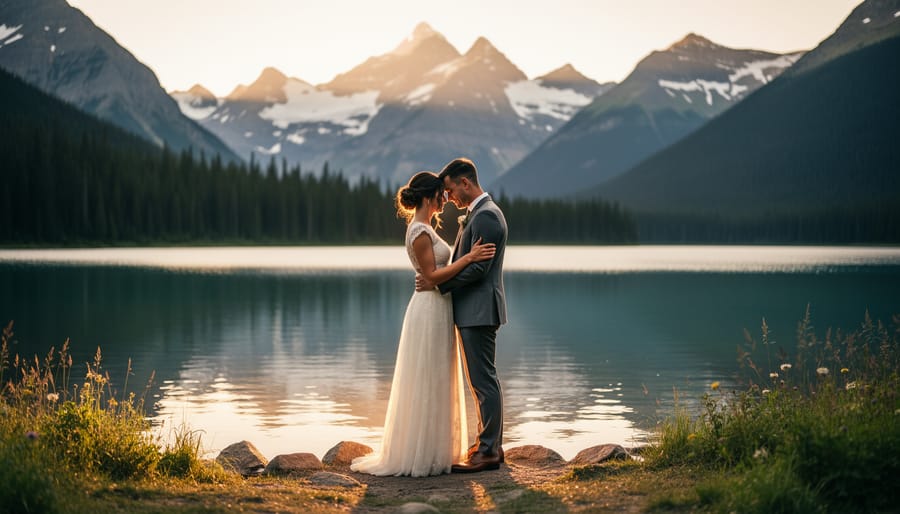
Before you fall in love with a sunrise ceremony on a mountain ridge or book your dream photographer, pause and handle the legal groundwork. Marriage licenses in Canada operate under provincial jurisdiction, each with its own waiting periods, expiration windows, and residency rules that can derail your plans if you discover them too late. A marriage license issued in Ontario remains valid for only 90 days, while Alberta’s holds for three months from the date of issue, and British Columbia licence timing requires you to wait one business day after application before your ceremony can proceed. Miss these windows and you’ll need to reapply, pay again, and potentially reschedule everything.
Witness requirements vary just as widely. Ontario and British Columbia demand two witnesses who are 19 and 18 years old respectively, while some couples are surprised to learn their photographer or officiant can legally serve in that role if you’re eloping solo. Your officiant must hold valid credentials recognized by your province, whether that’s a registered religious leader, a licensed civil officiant, or in rare cases, self-solemnization where you legally marry yourselves without anyone presiding. Verify their registration number and ensure they’ll file your paperwork correctly after the ceremony.
Weather windows for outdoor Canadian elopements carry their own timing pressures. June through September offers the most reliable conditions for alpine locations like Banff or Jasper, but these months also coincide with peak tourist season and limited vendor availability. If you’re dreaming of a lakeside ceremony in Muskoka or exploring weekend wedding venues across the country, book your photographer and officiant at least six months ahead for summer dates. Shoulder seasons like May and October offer stunning light and fewer crowds, but prepare backup indoor options should rain or early snow arrive.
Location permits add another layer. National parks require special use permits for ceremonies, often with application windows opening months in advance and blackout dates during high visitation periods. Provincial parks enforce similar rules. Start this research the moment you settle on a location, not the week before your elopement date.
The 7-Step Elopement Planning Process
Step 1: Define Your Elopement Vision and Budget
Before you book a single vendor or scout a location, sit down with your partner and answer one question: what does our elopement actually look like? The term means something different to every couple. For some, it’s truly just the two of you exchanging vows on a mountain summit with only your photographer as witness. For others, it’s an intimate gathering of your closest eight or ten people, parents, siblings, your best friend, sharing champagne on a lakeside dock after your ceremony.
Start by discussing the atmosphere you’re craving. Are you adventure seekers who want to hike to a backcountry waterfall in your wedding attire, or do you envision a luxurious micro-wedding at a boutique inn with a private chef? There’s no wrong answer, but clarity here shapes every decision that follows.
Next, separate your must-haves from your nice-to-haves. Most couples planning elopements in Canada identify three non-negotiables: a photographer who captures their story authentically, a location that moves them, and the space to write personal vows without time pressure. Everything else, florals, hair and makeup, a videographer, a celebratory dinner, falls into the flexible category.
Now translate that vision into numbers. Canadian elopements typically range from $3,000 to $12,000, depending on your choices. A simple ceremony with photography in a provincial park might cost $4,000, while a helicopter adventure elopement in the Rockies with full-day coverage and luxury accommodations can reach $15,000. Set a comfortable range, leaving room for the details that matter most to your love story.
Step 2: Choose Your Location and Season
Your location sets the stage for every memory you’ll carry forward. Think beyond what looks beautiful in photos, though Canadian landscapes deliver that in abundance, and choose a place that resonates with your story as a couple.
Start by considering what draws you together. Do you crave the drama of Banff’s turquoise lakes framed by snow-capped peaks, or the quiet intimacy of a British Columbia coastal forest where mist clings to ancient cedars? Perhaps Muskoka’s golden-hour lakeshores feel like home, or the raw vastness of Yukon wilderness calls to your adventurous spirits. Each region offers distinct moods and photo backdrops, but the right choice is the one that feels authentically yours.
Season shapes everything. Summer in the Rockies means wildflower meadows and long daylight, but also crowds requiring permits and early booking. Fall delivers fiery foliage and softer light, though weather grows unpredictable. Winter elopements offer crystalline stillness and dramatic snow-draped landscapes, but demand cold-weather gear and shorter shooting windows. Spring brings renewal and fewer tourists, with variable conditions that reward flexibility.
Accessibility matters more than couples expect. That alpine meadow may require a two-hour hike, magical, but challenging in a gown. Research permit requirements early; many national and provincial parks mandate advance applications and restrict ceremony locations.
Working with a local photographer who scouts locations regularly proves invaluable. They know hidden gems, optimal times for light, and which spots photograph best in each season, turning your vision into a beautifully captured reality.
Step 3: Research and Secure Legal Requirements
Before you fall in love with a mountaintop ceremony, fall in line with the paperwork that makes it legally binding. Each Canadian province sets its own marriage rules, and missing a deadline can postpone your dream date.
Start by researching your ceremony province’s marriage license requirements, most require application in person with government-issued ID and birth certificates, though some now offer online options. Alberta issues licenses immediately, while Ontario enforces a mandatory wait period. Note expiration windows too: your license typically expires 90 days after issue, creating a specific timeframe for your vows.
Next, confirm witness requirements. Most provinces require two witnesses aged 18 or older who understand what they’re witnessing. Yes, your photographer can serve as one, many elopement photographers consider it an honor, and it solves logistics beautifully when you’re deep in the backcountry. Just confirm availability beforehand, especially if you’re using tips from an environmental portrait guide that positions you far from civilization.
Book your officiant early, verifying their credentials are current and recognized in your province. Some couples explore self-solemnization where legal, though currently no Canadian province permits marriage without an authorized officiant, unlike certain U.S. states.
Create a documentation checklist with deadlines: license application date, ceremony date, and registration submission deadline (usually within 48 hours post-ceremony). Your officiant typically handles registration, but confirm this responsibility in writing.
Step 4: Book Your Essential Vendors
Your photographer isn’t just someone who documents your day, they become your guide, timeline architect, and often your witness. Book them first. Experienced elopement photographers know the light patterns at Moraine Lake, understand permit logistics for Tofino beaches, and can recommend ceremony timing that maximizes golden hour magic. They’ll shape your entire day’s flow, so secure this vendor before making other decisions.
Next, find your officiant. For intimate ceremonies, seek someone who offers personalized vows and understands elopement pacing, you want unhurried storytelling, not a rushed courthouse script. Many Canadian provinces allow your photographer to serve as a legal witness, streamlining your vendor list. Confirm your officiant’s credentials are recognized in your chosen province and discuss their vision for your ceremony length and tone.
From there, add vendors based on your priorities. A florist who specializes in wild, organic arrangements suited to mountain hikes. A hair and makeup artist comfortable working in remote locations without electrical outlets. An adventure guide if you’re hiking to a backcountry ceremony site with gear in tow.
Consider elopement packages that bundle these services. Reputable providers pair photographers with trusted local vendors who’ve worked together repeatedly, ensuring seamless coordination. These packages often include location scouting, permit assistance, and backup plans, invaluable when you’re planning from another province or navigating unfamiliar terrain. You gain not just vendors, but a cohesive team invested in your story.
Step 5: Plan Your Ceremony Details and Personalization
This is where your elopement transforms from a ceremony into a story only you could tell. Begin by writing your vows, speak from the heart, whether that’s three sentences or three pages, promises whispered or boldly declared. Choose readings that resonate: poetry, excerpts from your favourite book, lyrics that have soundtracked your relationship. Consider rituals that honor your values, handfasting with ribbon in your wedding colors, a unity ceremony blending sand from both your hometowns, or an Indigenous land acknowledgment if you’re marrying on traditional territories.
Your attire should feel like you, amplified. A flowing gown works beautifully in forest clearings, while a sleek suit or adventurous hiking boots suit mountain peaks. Think layers for unpredictable weather and footwear that matches your terrain. Florals can be a simple wildflower bouquet or lush arrangements styled for garden wedding photography whatever complements your setting.
Music sets the mood: a portable speaker playing your song as you walk toward each other, a guitarist friend, or simply the wind through the pines. Bring meaningful objects, your grandmother’s handkerchief, a photo of someone who can’t be there, stones collected from places you’ve traveled together. Elopements give you permission to skip tradition or reinvent it entirely, crafting a ceremony as unique as the love it celebrates.
Step 6: Organize Logistics and Timeline
Your timeline is where romance meets reality. Start with your ceremony time, then work backward: if you want sunset vows at Lake Louise, you’ll need to arrive ninety minutes early for portraits that master environmental portraits during golden hour. Factor in travel from your accommodation (mountain roads take longer than you think), getting-ready time with hair and makeup, and a buffer for the inevitable “we need one more kiss under that pine tree” moment.
Book your lodging near your ceremony location, waking up in a cozy Canmore cabin or oceanfront B.C. suite becomes part of your elopement story. Arrange transportation that handles terrain (4×4 for backcountry, boat for island ceremonies) and secure any required permits weeks in advance; national parks and provincial sites often need applications thirty days out.
Create a detailed shot list for your photographer: specific landscapes you’ve scouted, meaningful rituals, candid laughter during vows, that champagne toast on the clifftop. Build in at least ninety minutes for portraits if you’re chasing light.
Your backup plan matters as much as your dream plan. Identify an alternate indoor or sheltered location, pack elegant umbrellas that photograph beautifully, and remember that mist over Muskoka or snow dusting the Rockies often creates the most breathtaking images. Flexibility turns weather surprises into serendipity.
Step 7: Communicate with Loved Ones (If Applicable)
Choosing to elope doesn’t mean choosing secrecy, though it can if that’s your preference. Some couples share their plans months ahead, inviting close family into the journey without inviting them to the ceremony itself. Others tell no one until they’re officially married, revealing the news with stunning photos from a mountaintop in Jasper or a forest clearing on Vancouver Island.
If family expectations weigh heavy, try this approach: “We’re planning something very small and intimate, just the two of us and our photographer. It’s not about excluding anyone; it’s about creating a moment that feels authentically us. We’d love to celebrate with you afterward.” Most pushback dissolves when loved ones understand it’s about connection, not rejection.
Consider a livestream if you want witnesses without physical presence. Many officiants can facilitate video calls that let grandparents watch you exchange vows beside Lake Louise in real time. Just ensure cell service exists at your location.
Post-elopement gatherings offer beautiful compromise. Host a casual backyard dinner where you screen your highlight video, display framed portraits from your day, and cut a cake together. Or plan a larger celebration weeks later, complete with toasts and dancing, without the pressure of a traditional wedding timeline. One couple we worked with created a photo book they passed around at their gathering, letting guests experience their Yukon wilderness ceremony through images and handwritten notes in the margins.
Your elopement, your boundaries, your celebration.
How to Know Your Elopement Plan Is Complete

Two weeks before your elopement, you shift from planning mode to verification mode. This is your moment to walk through every detail with fresh eyes, ensuring nothing slips through the cracks when you’re caught up in the excitement of your approaching celebration. Think of this as your final safety net, the process that transforms hope into certainty.
Start by pulling out your marriage license and checking the valid dates against your ceremony date. Licenses expire, sometimes quickly, and many provinces require them to be used within a specific window after issuance. Next, open every vendor contract and confirm that names, dates, locations, and times match your current plans. Save backup phone numbers for each vendor in your phone, not just email addresses. You want direct lines of communication if your photographer’s car breaks down on the morning of your elopement or your officiant needs last-minute directions to your mountain ceremony site.
Your two-week-out checklist should include:
- Marriage license validity confirmed for ceremony date with expiration noted
- All vendor contracts reviewed, signed, and filed with emergency contact numbers saved
- Detailed timeline created and shared with photographer, officiant, and any other team members
- Location permits printed or downloaded to your phone, along with parking or access instructions
- Attire tried on one final time, alterations completed, rings sized and stored safely
- Shot list for wedding elopement portraits reviewed with your photographer, including must-have moments and specific landscape features
- Weather backup plan confirmed with alternative indoor location or date flexibility discussed
- Accommodation and transportation details reconfirmed, especially if traveling to remote areas
Walk through your day mentally from wake-up to sunset. Can you picture each transition? Do you know where you’ll get ready, how long it takes to reach your ceremony site, when golden hour hits that particular valley? If any gap feels fuzzy, clarify it now. This walkthrough isn’t about perfectionism. It’s about presence, ensuring that on your elopement day, you can be fully immersed in the experience rather than troubleshooting logistics in your hiking boots.
What Comes After: Marriage Registration and Celebration
Your elopement ceremony might have felt like a perfect, self-contained world, but a few practical steps ensure it’s legally binding and that your memories endure. Within days of your ceremony, your officiant will submit your signed marriage license to the provincial vital statistics office, confirm they’ve done so, then order several certified copies of your marriage certificate for name changes, banking updates, and insurance adjustments. If you kept your elopement private, decide how you’ll announce it: a simple photo shared with loved ones, a mailed card with your favorite image, or a casual backyard gathering where you screen highlights from your day.
Many couples plan a post-elopement celebration weeks or months later, think a relaxed dinner party, a campfire evening with close friends, or a cocktail reception that lets you share your story without the pressure of a traditional wedding. This is your chance to extend the joy to those who couldn’t witness your vows.
Finally, preserve the day itself. Work with your photographer to design a heirloom album that showcases the sweep of your location and the intimacy of your creative portrait posing or select statement prints for your home, images that return you to that mountaintop or forest clearing every time you pass them. These aren’t afterthoughts; they’re how your elopement becomes a living part of your life together.
Common Elopement Planning Questions
How far in advance should we plan our elopement?
Most couples benefit from a three to six month planning window, which allows time to secure permits, book your photographer during their best season, and navigate marriage license requirements without stress. That said, we’ve helped couples plan beautiful elopements in as little as two weeks when they’re flexible on location and date.
Can we legally elope in a national park?
Yes, but you’ll need to secure the proper permits well in advance, as Parks Canada requires commercial photography permits and sometimes ceremony permits depending on location and guest count. Popular spots like Moraine Lake or Peyto Lake have specific restrictions and blackout periods, so working with a local photographer familiar with the process saves considerable headache.
Do we need witnesses for our elopement?
Most Canadian provinces require one or two witnesses over 18 to sign your marriage license, though requirements vary. Your photographer and officiant often serve as witnesses, making it wonderfully simple for truly private ceremonies.
What happens if it rains on our elopement day?
Embrace it or have a backup plan ready. Rain creates moody, romantic photos in forests and along coastlines, and we always bring clear umbrellas for stunning shots. For mountain elopements where weather shifts quickly, we scout covered locations nearby or build flexibility into your timeline to wait out passing showers.
How do we choose between elopement packages?
Look for packages that align with your priorities, some couples need full planning support while others just want exceptional photography. The best packages include local expertise, permit assistance, timeline planning, and enough coverage to capture your entire experience rather than rushing through a two-hour window.
Should we tell our families before we elope?
There’s no single right answer, and it depends entirely on your relationships and comfort level. Some couples share their plans beforehand and offer a livestream or post-elopement celebration, while others announce after the fact with gorgeous photos and heartfelt notes.
What if we want to elope but still have a reception later?
This approach gives you the best of both worlds, the intimate ceremony you crave and a celebration that includes everyone who matters. Many couples elope during ideal weather months, then host a casual reception or dinner party weeks or months later without the pressure of traditional wedding timelines.
These questions come up in nearly every conversation we have with couples considering elopements, and they reflect the beautiful tension between spontaneity and practicality. The reassuring truth is that most concerns have straightforward solutions once you understand the landscape, literally and figuratively. Weather becomes an adventure rather than a crisis when you trust your team and pack layers. Legal requirements feel less daunting when you break them into simple steps weeks before your date. Family dynamics smooth over when you communicate with honesty and offer ways for loved ones to share in your joy, even if they aren’t standing beside you on a windswept cliff.
Planning an elopement wedding isn’t about adding complexity to something beautifully simple. It’s about protecting the intimacy and intention that drew you to this path in the first place. Every step in this process, from researching marriage licenses to choosing the perfect alpine meadow or coastal overlook, serves a single purpose: ensuring your ceremony unfolds exactly as you’ve imagined it, without logistical surprises stealing your presence from the moment.
The couples who experience the most profound elopement days aren’t those who wing it entirely, hoping everything falls into place. They’re the ones who’ve handled the practical details thoughtfully, leaving themselves free to feel everything when they exchange vows with only the mountains or the ocean as witnesses. They’ve confirmed their license is valid, their photographer knows the golden hour timeline, their officiant understands their vision. And because those foundations are solid, they can be completely present when it matters most.
Canada’s landscapes offer an unmatched backdrop for these intimate promises. Whether you’re standing beneath the northern lights in Yukon, overlooking Moraine Lake’s impossible turquoise waters, or tucked into a quiet forest clearing on Vancouver Island, the setting becomes part of your story. The planning you’ve invested ensures that story gets captured beautifully, celebrated legally, and remembered forever.
If you’re ready to transform your elopement vision into reality, explore how Canada In Love’s elopement packages combine expert photography, local knowledge, and full-day support across this country’s most stunning locations. We’ve guided hundreds of couples through this process, and we’d be honored to help you plan yours.