
British Columbia’s wildflower meadows reach their most breathtaking displays along Juniper Ridge at Sun Peaks Resort, where alpine slopes burst into a kaleidoscope of colour each peak season, creating an unforgettable backdrop for engagement photography. If you’re planning to capture your love story surrounded by nature’s most spectacular canvas, timing your session during the summer wildflower peak transforms ordinary garden wedding photos into something truly magical.
We’ve explored BC’s most stunning wildflower locations for engagement sessions, and what we discovered goes far beyond simple scenery. The right wildflower meadow offers couples layers of texture, natural light filtered through mountain air, and an ever-changing palette that shifts from soft pastels to vibrant jewel tones depending on elevation and microclimate. These natural settings eliminate the need for elaborate props or artificial backdrops because the landscape itself becomes your co-creator.
Choosing your wildflower location isn’t just about finding pretty blooms. You need accessible terrain that accommodates both yourselves and your photographer, reliable peak timing so you aren’t standing in a field of green stems, and responsible practices that preserve these fragile ecosystems for future couples. The mountainside at Sun Peaks exemplifies this perfect combination, where ridgelines explode with colour while maintained trails protect the very flowers that draw us there.
This guide walks you through seven exceptional BC wildflower destinations we’ve photographed, each offering distinct advantages for engagement sessions. You’ll learn which locations deliver the most dramatic alpine backdrops, how to plan around bloom cycles, and the conservation principles that keep these spaces beautiful for generations of love stories to come.
Our Top Wildflower Engagement Locations at a Glance
We scouted these seven locations through multiple bloom seasons, evaluating each for photographic quality, bloom reliability, and the experience couples actually have during their engagement sessions. Here’s what distinguishes each spot.
Juniper Ridge at Sun Peaks Resort delivers the most dramatic mountain meadow displays we’ve photographed, with the mountainside bursting with colour during peak season and accessible trails that let photographers work without trampling blooms. Manning Park’s Cascade Lookout offers classic subalpine wildflower diversity, ideal for couples wanting lupine and paintbrush varieties in their frames. Joffre Lakes Provincial Park combines turquoise glacier-fed waters with wildflower-lined trails, perfect when you want both water and bloom elements.
Whistler’s Singing Pass provides expansive high alpine meadows with mountain vistas, though the longer hike requires planning. Columbia Valley Wetlands brings softer, golden-hour light at lower elevation with easier access for photographers carrying gear. Garibaldi Lake trails reward adventurous couples with iconic BC backdrops reached through wildflower zones. The Okanagan grasslands showcase BC’s unique desert blooms, balsamroot and lupine against warm, golden light that differs completely from mountain settings.
How We Chose These Wildflower Engagement Spots
Choosing the right wildflower location for engagement photos requires more than just spotting pretty blooms. We evaluated dozens of BC wildflower destinations through on-site visits during peak season and direct conversations with wedding photographers who’ve shot engagements across the province. Our goal was to identify locations that deliver consistently spectacular results while remaining practical for real couples planning their sessions.
Each location in this guide earned its place through rigorous assessment across multiple dimensions:
- Bloom reliability and peak timing consistency based on multi-year observation patterns
- Photographic quality including natural light conditions, color variety, and composition flexibility
- Practical accessibility factoring in trail difficulty, distance, and physical requirements for couples in engagement attire
- Permit requirements and logistical considerations that affect planning and costs
- Real photographer feedback from professionals who’ve completed successful engagement shoots at each site
We prioritized locations where blooms appear dependably rather than sporadically, drawing on insights like Sun Peaks Resort’s identification of Juniper Ridge as the place to go for the best blooms when the mountainside bursts with colour during peak season. Photographic quality proved equally crucial. We looked for sites offering varied shooting angles, natural light that flatters couples throughout the day, and bloom densities that create impact without overwhelming the frame.
Accessibility shaped our recommendations significantly. While we included some challenging hikes for adventurous couples, we ensured clear guidance about what each location demands physically. We also verified permit requirements for every spot, so you won’t face surprises when booking your photographer. The insights came from photographers who’ve navigated these locations with real couples, capturing genuine engagement stories against BC’s wildflower backdrops.
BC’s Best Wildflower Engagement Locations
1. Juniper Ridge at Sun Peaks Resort, Mountain Meadows Ablaze with Color
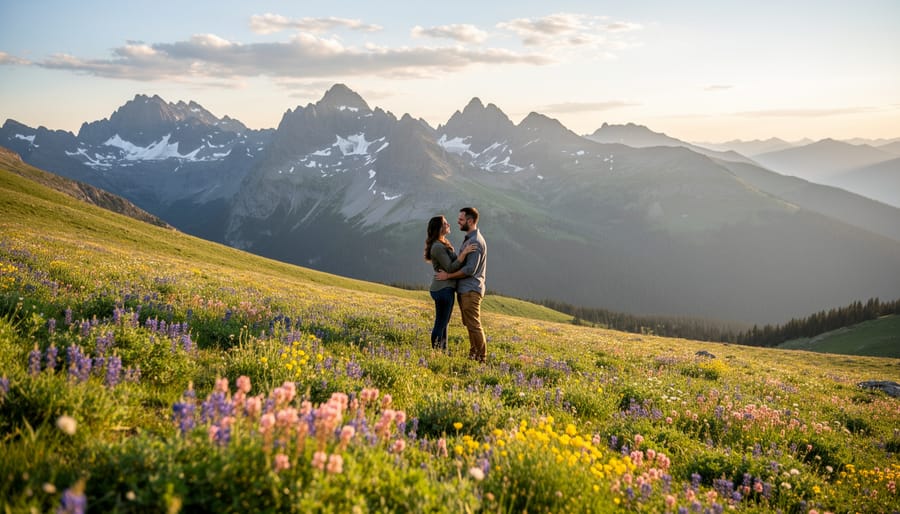
Juniper Ridge at Sun Peaks Resort stands out as our top pick for wildflower engagement photography in BC. During peak season, which Sun Peaks Resort confirmed had arrived in mid-July 2026, the mountainside bursts with colour across sweeping alpine meadows that create a vivid, romantic canvas for couples. We’ve shot engagements here and consistently found the bloom density and variety exceptional, with lupines, paintbrush, and arnica creating layered colour fields that photograph beautifully from every angle.
What sets Juniper Ridge apart is the combination of dramatic visual impact and relative accessibility. The trails wind through meadows rather than requiring steep ascents to reach bloom zones, making it feasible for couples in engagement attire to move comfortably between shooting locations. The elevation provides mountain vistas as backdrops without the exhausting hikes some alpine spots demand, and the open meadow structure offers varied compositions, from wide shots capturing couples against endless flower fields to intimate close-ups framed by blooms.
The light quality here is remarkable. Morning sessions bring soft, directional light that highlights the texture and depth of the wildflower layers, while late afternoon shoots benefit from warm alpine glow that intensifies the already vibrant colours. We’ve found couples can move freely through different meadow zones during a single session, creating diverse looks without driving between locations.
Responsible photography matters at Juniper Ridge. Following wildflower viewing guidance we stay on established trails and position couples on durable surfaces rather than trampling blooms. The meadows are fragile ecosystems, and thoughtful photographers can capture stunning engagement stories while preserving what makes this location extraordinary.
2. Manning Park’s Cascade Lookout, Subalpine Wildflower Paradise
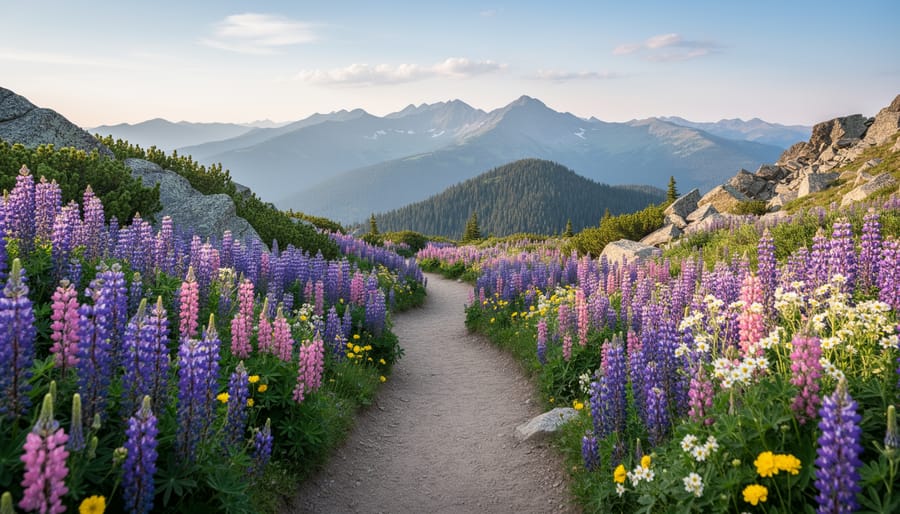
Manning Park’s Cascade Lookout delivers one of BC’s most spectacular subalpine wildflower displays we’ve photographed, where rolling meadows erupt in waves of purple lupine, scarlet paintbrush, and delicate white avalanche lilies. This location stands out for its accessible drama, the meadows stretch across open slopes that frame couples against both wildflower carpets and distant mountain ridges, creating layered depth in every frame.
The hike to Cascade Lookout requires moderate effort, climbing through forest before opening into the subalpine zone where the real magic happens. Once you reach the meadows, the landscape rewards with multiple composition opportunities. We’ve found the best couple portraits come from positioning pairs within the flower fields themselves, using the natural undulation of the terrain to create intimate foreground blooms while keeping mountain vistas visible behind.
The lupine typically dominates in shades ranging from deep violet to soft lavender, punctuated by the vibrant reds and oranges of Indian paintbrush. Avalanche lilies cluster in cooler pockets, their pristine white petals catching morning light beautifully. The color contrast between these three signature blooms creates visual interest without needing heavy editing.
For photographers, the open meadow structure allows flexible positioning to work with changing light throughout the day. Morning sessions capture dewdrops on petals and softer shadows, while late afternoon brings warmer tones that complement the lupine perfectly. The elevation keeps temperatures comfortable even during summer peak bloom, and the expansive setting means multiple couples can shoot here without interfering with each other’s frames, though we recommend staying on established paths to protect the delicate ecosystem.
3. Joffre Lakes Provincial Park, Turquoise Waters Meet Wildflower Trails
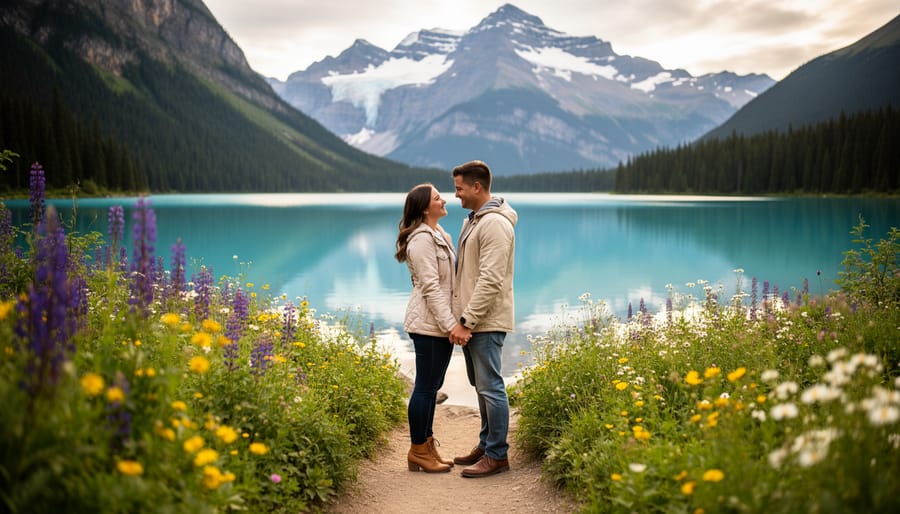
Joffre Lakes Provincial Park delivers one of BC’s most photographed combinations: impossibly turquoise glacial water framed by wildflower-studded trails. We’ve shot engagements here where couples stand surrounded by lupine, arnica, and paintbrush blooms while three distinct glacier-fed lakes provide jaw-dropping backdrops that shift from milky jade at the lower lake to vivid turquoise at the upper basin.
The trail gains elevation through three lake stops, each offering different wildflower zones and water colors. Lower Joffre Lake sits steps from the parking area with accessible shoreline meadows dotted with early-season blooms. Middle and Upper Joffre Lakes require hiking, but the payoff is dramatic: alpine wildflowers carpet the slopes while the Matier Glacier feeds water so brilliantly colored it looks retouched straight out of camera.
For engagement sessions, the interplay between water and blooms creates layered compositions you won’t find elsewhere. Couples can pose with wildflower foregrounds and turquoise lake backgrounds, or shoot from elevated viewpoints where the flowers frame the entire basin below. The trail’s popularity means you’ll share the space with hikers, so we recommend early morning sessions when light is soft and crowds are thinner.
The hike to Upper Joffre covers moderate terrain with steady elevation gain. Couples should wear sturdy footwear that works for both hiking and photos, and photographers need to plan for changing light conditions as you move between forested sections and open alpine zones. The dramatic setting rewards the effort with engagement images that capture both BC’s iconic turquoise waters and its fleeting wildflower beauty in a single frame.
4. Whistler’s Singing Pass, High Alpine Wildflower Haven
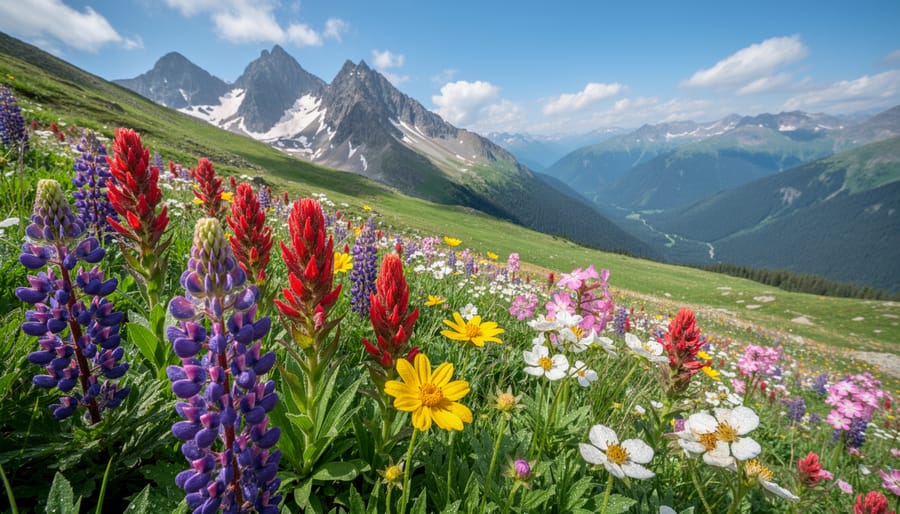
Singing Pass delivers what serious wildflower engagement couples dream about: acre after acre of high alpine meadows carpeted in lupine, paintbrush, arnica, and heather, all framed by jagged Whistler peaks. We’ve shot here during peak bloom, and the sheer scale of color spreading across the valley floor creates dramatic wide-angle compositions that few BC locations can match. The wildflower display here isn’t scattered patches, it’s continuous waves of blooms that let you position couples almost anywhere and capture stunning backdrops.
The trade-off for this alpine paradise is commitment. The trail from Whistler Village via the Fitzsimmons Creek trailhead runs roughly 10 kilometers one way with significant elevation gain, making this a full-day adventure rather than a quick portrait session. Most couples and photographers start early, hike to the meadows with camera gear, shoot during optimal light, then descend before dark. The round-trip demands fitness and proper planning, lightweight camera kits work better than full studio setups, and sturdy footwear matters on rocky alpine sections.
Peak bloom typically falls in late July through early August when snow has melted from the high country and wildflowers erupt in response to the short growing season. Weather shifts fast at elevation, so we always pack layers and watch forecasts closely. Morning light illuminates the eastern-facing meadows beautifully, while late afternoon brings warm tones across the western slopes.
For couples who embrace the hike and want engagement photos that showcase BC’s wild alpine character rather than manicured gardens, Singing Pass rewards the effort with unforgettable imagery.
5. Columbia Valley Wetlands, Golden Hour Wildflower Magic
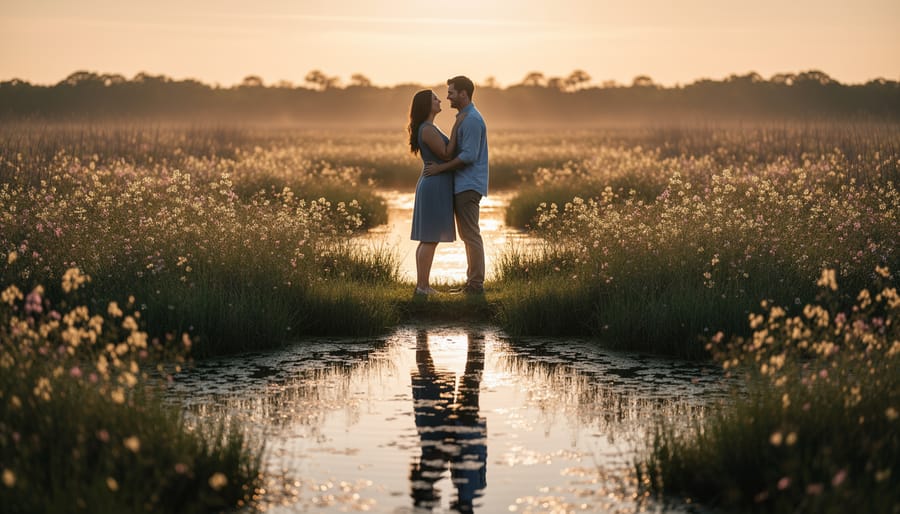
Nestled in the Kootenay Rockies, Columbia Valley Wetlands offers a completely different wildflower engagement experience from the high alpine settings. We found this lower-elevation location perfect for couples seeking romance without the strenuous hike, the wetlands provide accessible boardwalks and gentle trails that let you focus entirely on each other rather than catching your breath.
The magic here happens during golden hour. As evening light filters across the marsh, it catches the delicate petals of marsh marigolds glowing brilliant yellow against dark water, while shooting stars arch gracefully in shades of pink and magenta. The soft, diffused light creates an ethereal quality we rarely see in harsher mountain settings, lending itself beautifully to intimate floral portraits where the flowers frame your connection rather than compete with it.
The wetlands bloom earlier than mountain meadows, typically offering peak displays when alpine zones remain snowbound. This timing advantage means you can capture wildflower engagement photos before summer crowds arrive at more popular destinations. The varied terrain provides diverse backdrops within a compact area: cattail marshes, lily-filled ponds, and drier grassland sections each offer distinct visual stories.
Photographers appreciate the flat terrain for equipment handling and the predictable light quality. The reflective water surfaces add dimension to compositions, while the abundance of wildlife, herons, eagles, songbirds, can create spontaneous moments of wonder during your session. For couples prioritizing comfort and accessibility while still wanting genuine wildflower beauty, Columbia Valley Wetlands delivers romantic dreamy imagery without compromise.
6. Garibaldi Lake Trails, Wildflowers with Iconic BC Backdrops
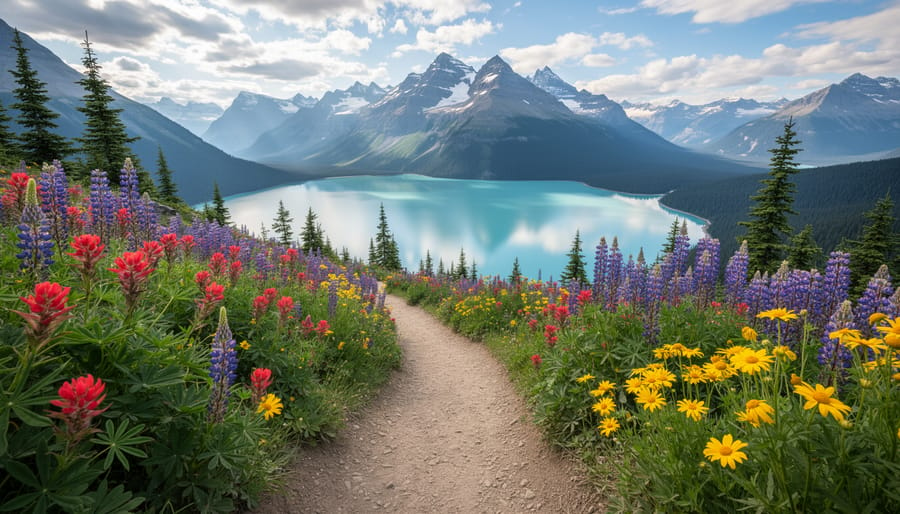
The journey to Garibaldi Lake transforms your engagement session into an epic adventure through distinct wildflower zones that shift with elevation. We tested this trail for engagement photography and found the 9-kilometre hike rewards adventurous couples with some of BC’s most dramatic backdrops, turquoise glacial waters framed by snow-capped peaks, with wildflower-studded alpine meadows creating layers of color and texture impossible to replicate anywhere else.
The trail climbs through stages of wildflower progression. Lower sections near the trailhead feature woodland species and early bloomers, while mid-elevation zones burst with lupine, arnica, and valerian blanketing hillsides in purple and gold. As you approach the lake, subalpine meadows open up with paintbrush, heather, and glacier lilies scattered across rocky terrain, offering intimate foreground elements against the iconic Garibaldi panorama.
What makes this location exceptional for engagement photos is the variety within a single hike. Your photographer can capture intimate moments in flower-filled meadows, adventurous shots crossing log bridges over rushing creeks, and grand finale images at the lake viewpoint where wildflowers frame the impossibly blue water. The elevation gain means ever-changing light and perspectives.
This location demands fitness and preparation. Both partners need solid hiking experience, proper footwear, and comfort with sustained uphill sections. We recommend starting at sunrise to capture morning light on the blooms and avoid afternoon crowds. The trail’s popularity means weekday sessions work best for privacy. Pack layers, alpine weather shifts quickly, and plan for your photographer to scout vantage points while you rest. The effort pays off in engagement photos that tell a genuine adventure story against BC’s most breathtaking natural canvas.
7. Okanagan Grasslands, Desert Wildflowers and Golden Light
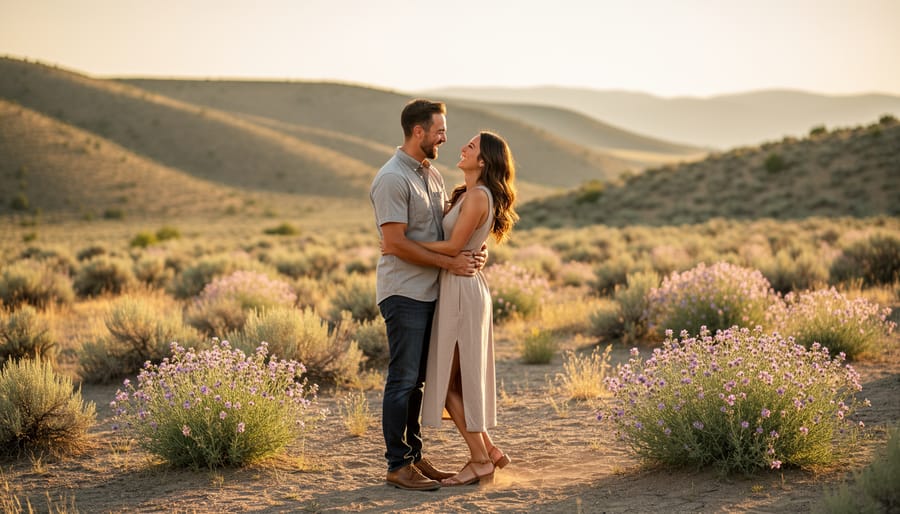
We tested the Okanagan grasslands during bloom season and discovered BC’s most surprising wildflower secret, a desert ecosystem that looks nothing like the alpine meadows most couples expect. Here, arrowleaf balsamroot creates vast carpets of sunflower-yellow across rolling hillsides, punctuated by purple lupine and the silvery-green of sagebrush. The landscape feels expansive rather than enclosed, with open skies and warm tones that photograph beautifully in the soft, golden light of late afternoon.
What sets this location apart is the distinctive character it brings to engagement photos. Instead of snow-capped peaks and evergreens, you’ll frame your portraits against sun-baked hills, weathered grasses, and that unmistakable Okanagan warmth. The balsamroot blooms create stunning foreground elements without overwhelming the composition, while the desert palette of golds, purples, and earth tones photographs with rich saturation that requires minimal editing.
We found the grasslands forgiving for couples who worry about hiking, most accessible viewpoints require only short walks from parking areas, making this an excellent choice if you want wildflower magic without the alpine trek. The terrain is gentler than mountain trails, though we recommend sturdy footwear since you’re walking through natural grasses and uneven ground.
The light here is exceptional. The open landscape means you’re not fighting dense forest shade, and the golden hour glow seems to last longer across these hills. For couples drawn to warmth, intimacy, and landscapes that feel both wild and welcoming, the Okanagan grasslands offer wildflower engagement photos unlike anywhere else in BC.
Comparing BC’s Wildflower Engagement Locations

We evaluated each wildflower location against consistent criteria to help you choose the right setting for your engagement session. The table below breaks down the key differences that matter most when planning your shoot.
| Location | Typical Peak Season | Hiking Difficulty | Best For (Photography Style) |
|---|---|---|---|
| Juniper Ridge, Sun Peaks | Mid-July | Easy to Moderate | Vibrant alpine color, dramatic mountain backdrops |
| Manning Park Cascade Lookout | Late July to early August | Moderate | Intimate meadow portraits, subalpine wildflower diversity |
| Joffre Lakes | Late July to August | Moderate | Turquoise water contrasts, trail-side wildflower frames |
| Whistler Singing Pass | Late July to early August | Challenging | Expansive meadow vistas, epic mountain panoramas |
| Columbia Valley Wetlands | Late May to June | Easy | Soft golden hour light, dreamy romantic mood |
| Garibaldi Lake Trails | July to August | Challenging | Adventure-focused couples, iconic BC landscapes |
Juniper Ridge and Columbia Valley Wetlands offer the easiest access for couples who want stunning wildflower backdrops without strenuous hiking, while Singing Pass and Garibaldi reward adventurous pairs with dramatic high-alpine settings. Timing matters: lower-elevation spots like Columbia Valley bloom weeks earlier than mountain meadows, giving you flexibility if your engagement timeline is tight. Most BC provincial parks require day-use permits, which you can reserve online, though some locations like Whistler’s trails have different systems managed by resort authorities.
Understanding BC Wildflower Seasons and Bloom Types
British Columbia’s wildflower displays unfold in a stunning elevation-driven sequence that spans from valley floors in spring through high alpine meadows in late summer. Understanding this bloom progression helps couples time their engagement sessions to catch the most spectacular displays.
The wildflower season begins in lower valleys and wetlands during late April and May, where marsh marigolds, shooting stars, and trilliums emerge first. As temperatures warm, the bloom wave climbs upward through elevation zones, reaching mid-elevation meadows and lakeside trails by June and early July. The highest alpine zones peak last, typically from mid-July through August, as verified by locations like Sun Peaks Resort where peak wildflower season arrived in mid-July 2026 with Juniper Ridge’s mountainside bursting with colour.
- Alpine Meadows
- High-elevation wildflower zones above the treeline, typically peaking July through August, featuring compact blooms like alpine forget-me-nots and glacier lilies against dramatic mountain backdrops.
- Subalpine Zones
- The transition band between mountain forests and alpine areas where lupine, paintbrush, and avalanche lilies create expansive colour displays, usually blooming late June through July.
- Valley Blooms
- Lower-elevation wildflowers appearing April through June in grasslands and wetlands, including balsamroot, shooting stars, and marsh marigolds with gentler terrain and longer bloom windows.
- Desert Wildflowers
- BC’s unique Okanagan grassland species like balsamroot and sagebrush blooms that peak May through early June, offering warm golden light and distinctive arid-landscape backdrops.
Each ecosystem supports distinct flower varieties and photographic qualities. Mid-elevation forests transition through zones of trillium and calypso orchids, while subalpine meadows explode with Indian paintbrush, lupine, and arnica creating vivid colour carpets. The highest alpine zones feature delicate species adapted to harsh conditions, though these locations require more strenuous hiking to reach the blooms.
Protecting BC’s Wildflowers During Your Engagement Session
We’ve photographed engagements across BC’s wildflower meadows for years, and protecting these delicate ecosystems matters as much as capturing stunning images. The flowers that make your session magical are fragile and slow to recover from careless footsteps.
Always stay on designated trails, even when that perfect shot seems just a few steps into the meadow. Trampled vegetation takes years to bounce back in alpine environments, and compacted soil prevents seeds from germinating. Leave every flower unpicked, what looks like one bloom is part of a larger ecosystem supporting pollinators and wildlife. The moment you pluck a flower, you’ve removed seeds that would sustain next season’s display.
Work with photographers who understand Leave No Trace principles and respect closure signs during sensitive bloom periods. We carry our gear on trails, pack out everything we bring in, and time breaks to avoid trampling vegetation. Ask your photographer about their conservation practices before booking, professionals familiar with wildflower locations know how to create breathtaking images without damaging the landscape. Your engagement photos should celebrate BC’s natural beauty, not contribute to its degradation.
Planning Your Wildflower Engagement Session
Timing is everything when planning a wildflower engagement session. We’ve found that reaching out to photographers who work regularly in your chosen location pays off, they track bloom progression through the season and know when meadows hit peak colour. Based on current reports, mid-July marks prime wildflower season at locations like Juniper Ridge at Sun Peaks, where the mountainside bursts with colour during this window. Higher elevation spots tend to bloom later than valley floors, so if you miss early-season flowers at lower altitudes, alpine meadows offer a second chance.
Book your photographer three to six months ahead, especially for peak summer weekends. Ask specifically about their experience shooting at wildflower locations, understanding light conditions in open meadows versus forested trails makes a real difference in your final images.
For wardrobe, solid colours photograph beautifully against wildflower backdrops without competing visually. Flowing fabrics work well in meadow settings, and sturdy footwear matters since you’ll be walking trails. Check permit requirements for your location well ahead of your session date, some provincial parks require photography permits, while others allow personal shoots without paperwork.
Always have a backup location in mind. Weather shifts quickly in mountain environments, and bloom timing can vary by a week or two depending on spring snowmelt and temperatures. Your photographer should help you pivot to an alternative spot if conditions change unexpectedly.
Top Picks at a Glance
Here’s where each of BC’s premier wildflower locations truly shines. Juniper Ridge at Sun Peaks Resort earns our top overall pick for its reliable, vibrant mountainside displays that burst with colour during peak season, ideal for couples wanting dramatic alpine meadows without extreme hikes. Manning Park’s Cascade Lookout wins for subalpine variety, offering paintbrush, lupine, and avalanche lily displays in expansive meadows. Joffre Lakes Provincial Park stands out when you want the rare combination of turquoise glacier-fed waters framed by wildflower trails. For adventurous couples committed to epic backdrops, Garibaldi Lake Trails delivers iconic mountain vistas earned through a rewarding hike. Columbia Valley Wetlands excels for golden-hour magic and easier accessibility, while Whistler’s Singing Pass provides high alpine flower carpets for those willing to trek. Finally, Okanagan Grasslands offers something completely different, desert wildflowers with warm, golden light unlike typical mountain settings. Each location supports distinct photographic styles and elopement planning needs, so choose the backdrop that reflects your unique story.
Frequently Asked Questions About Wildflower Engagements in BC
Couples often wonder whether wildflower blooms are predictable enough to plan around. Peak bloom windows vary by elevation and weather, but mid-July through early August typically delivers strong displays in alpine zones like Juniper Ridge, while lower-elevation areas bloom earlier in spring. We’ve found that connecting with photographers who scout these locations regularly gives you the most accurate bloom forecasts for your specific session date.
Do wildflower locations in BC require permits for engagement photos?
Many provincial parks require day-use passes, and some locations like Garibaldi Lake and Joffre Lakes have trailhead parking restrictions during peak season. Commercial photography permits are typically needed when photographers use professional equipment in provincial parks, so confirm requirements when you book your session.
What happens if weather ruins our wildflower engagement day?
Mountain weather shifts quickly, so experienced photographers build flexibility into their schedules. Having weather backup plans that include alternative dates or lower-elevation locations protects your investment and reduces stress when conditions don’t cooperate.
What makes wildflowers photograph well for engagements?
The best wildflower backdrops offer layers of color without overwhelming your faces, natural depth that separates you from the background, and soft light that illuminates both blooms and skin tones beautifully. Dense meadows with varied heights create dimension, while scattered blooms provide breathing room in compositions.
How can we protect wildflowers during our session?
Stay on established trails even when moving between shots, and never pick or trample blooms for photos. Responsible photographers know how to position couples using paths and natural clearings, capturing stunning images while preserving these fragile ecosystems for future visitors.
Timing matters more than most couples realize. If you’re flexible with your engagement session date within a two-week window, your photographer can chase peak bloom conditions rather than hoping they align with a single predetermined day. The same principles that guide winter venue tips apply here: build contingency into your planning, trust local expertise, and embrace the unpredictability that comes with natural settings.
Choosing where to capture your engagement story among BC’s wildflower meadows is about more than finding beautiful blooms, it’s about discovering the landscape that truly reflects who you are as a couple. Whether you’re drawn to the high alpine drama of Whistler’s Singing Pass, the turquoise-meets-wildflower magic of Joffre Lakes, or the golden desert blooms of the Okanagan grasslands, each location offers its own character and emotional resonance.
Wildflower season is breathtakingly brief, a fleeting window when BC’s mountains and valleys erupt in colour before fading back to green. That ephemeral quality makes these engagement sessions even more special, you’re capturing a moment that exists only once each year, a natural backdrop that won’t wait. When you stand together in a meadow of lupine and paintbrush, you’re not just taking photos; you’re weaving your love story into the rhythm of the seasons and the wild beauty that makes British Columbia unforgettable.
Choose thoughtfully, plan with the blooms in mind, respect the delicate ecosystems that create this magic, and let BC’s natural tapestry become part of your forever memories.