
Garden wedding photography transforms an outdoor celebration into a timeless visual story by harnessing natural light, seasonal blooms, and layered greenery to create images that feel organic, romantic, and deeply personal. The key to capturing stunning garden wedding photos lies in working with the environment rather than against it: timing your portraits around soft morning or golden-hour light, embracing the unpredictable beauty of wind-swept petals and dappled shade, and allowing the garden’s natural palette to guide your composition.
For couples planning a garden celebration across Canada, the setting offers something no ballroom can replicate. Whether you’re exchanging vows beneath a rose-laden pergola in Vancouver’s mild coastal climate or surrounded by wildflower meadows in the Okanagan, the garden becomes more than a backdrop. It’s a living, breathing partner in your love story. The texture of weathered stone paths, the way afternoon sun filters through maple leaves, the scent of peonies caught in a veil, these sensory details translate into photographs that transport you back to the moment years later.
Successful garden wedding photography requires deliberate preparation. Seasons shift dramatically across this country, and what blooms in June in Ontario differs entirely from what flourishes in Alberta’s shorter growing season. Photographers who understand how to read natural light in open spaces, manage challenging contrasts between bright sky and shaded foliage, and position couples to take advantage of a garden’s best features will deliver images that feel effortless. The result is a collection of photographs where every frame breathes with life, where the environment enhances rather than distracts, and where your connection to each other remains the heart of every shot.
Why Garden Weddings Create Magic Behind the Lens
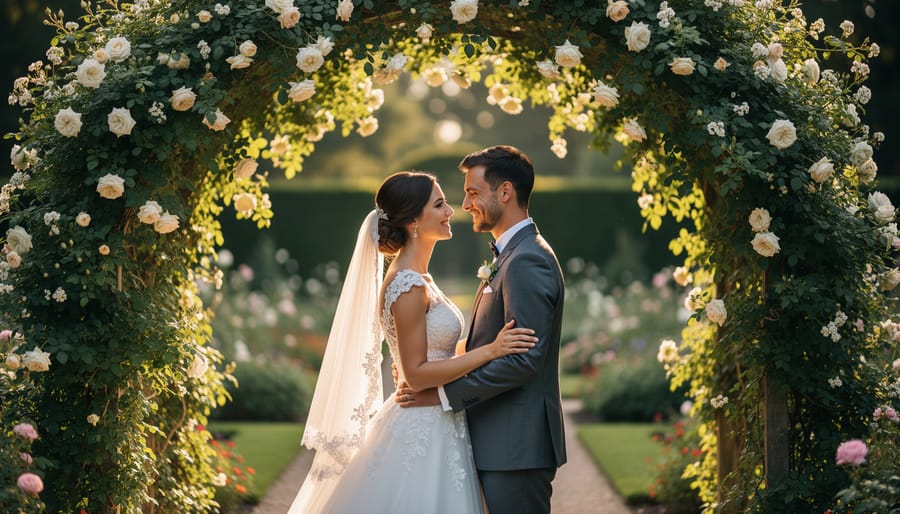
Gardens possess an inherent romance that transforms wedding photography from documentation into poetry. Unlike controlled indoor venues, gardens offer layers of organic texture that create depth in every frame. Sunlight filters through leaves in constantly shifting patterns, painting dappled shadows across faces and gowns that no studio lighting could replicate. This natural interplay between light and foliage produces soft, dimensional images where couples seem to glow from within rather than simply being illuminated.
The living backdrop changes everything. Roses climbing wooden arbors, peonies nodding in gentle breezes, and wildflowers carpeting meadow edges become more than decoration. They frame intimate moments authentically, without the staged feel of artificial arrangements. When a bride laughs among blooming hydrangeas or a couple steals a kiss beneath cherry blossoms, the garden participates in their story rather than simply hosting it.
Scale matters profoundly in garden settings. Unlike grand ballrooms where couples can feel dwarfed by architecture, gardens embrace them. Winding paths create natural progression for candid shots as guests wander between ceremony and reception. Hidden alcoves and secluded benches offer quiet refuges for tender portraits. The garden’s intimate proportions draw everyone closer, fostering genuine interactions that translate beautifully through the lens.
Canadian gardens tell distinctly regional stories. Vancouver Island’s rose gardens bloom against misty coastal backdrops, their petals jeweled with morning dew. Prairie wildflower meadows in Saskatchewan stretch toward endless horizons, offering dramatic golden-hour portraits. Ontario’s formal estate gardens provide structured elegance with flowering hedges and fountain features. Maritime gardens nestle against rocky shores, blending cultivated blooms with rugged natural beauty. Each region’s character infuses photographs with a sense of place that couples carry forward, images that whisper not just of their love but of the land that witnessed it.
Timing Your Garden Wedding for Perfect Light
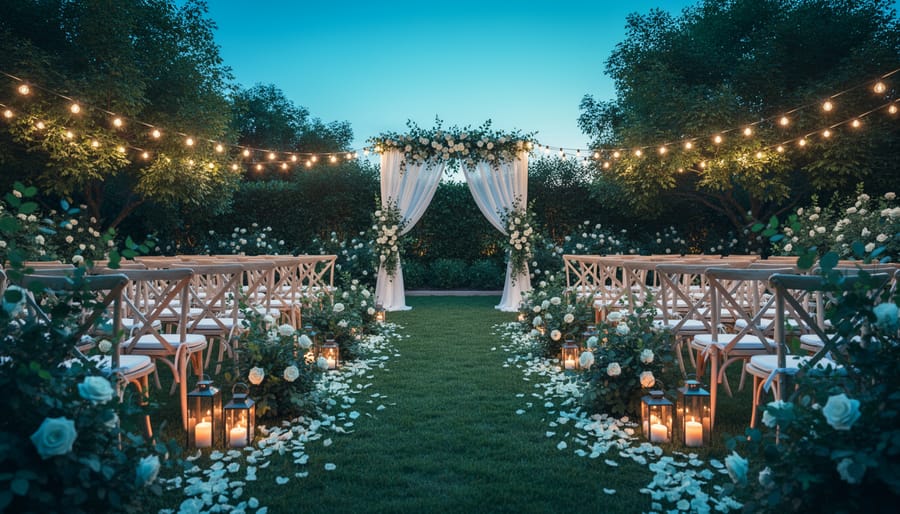
Seasonal Garden Photography Across Canada
Canada’s dramatic seasonal shifts transform garden wedding photography throughout the year, each season painting your celebration with its own palette and emotional resonance. In Ottawa’s spring, Commissioners Park explodes with hundreds of thousands of tulips, imagine exchanging vows amid waves of crimson, gold, and coral that create vibrant pops of colour against the city’s heritage architecture. Spring gardens photograph with fresh, optimistic energy, though April and May weather demands backup plans for sudden showers that can actually gift you with those coveted rain-kissed petal shots.
Victoria’s summer rose gardens peak in June and July, offering lush, romantic backgrounds with softer, more classic colour harmonies. The West Coast’s mild climate means blooms last longer, but photographing midday requires managing the intense contrast between sun-drenched petals and deep shade beneath garden canopies. Early evening sessions capture roses at their most luminous.
Ontario’s autumn gardens shift the mood entirely. September and October transform maple-lined estate gardens into tapestries of amber, crimson, and bronze. Fall light comes lower and warmer, naturally gilding everything it touches. These seasons photograph with nostalgic warmth, though peak colour timing varies yearly, sometimes by two weeks, making flexibility crucial when planning your garden celebration. Each Canadian season offers distinct visual storytelling, so choose the one that speaks to your love story’s character.
Working With Natural Elements in Garden Settings
When Weather Becomes Part of Your Story
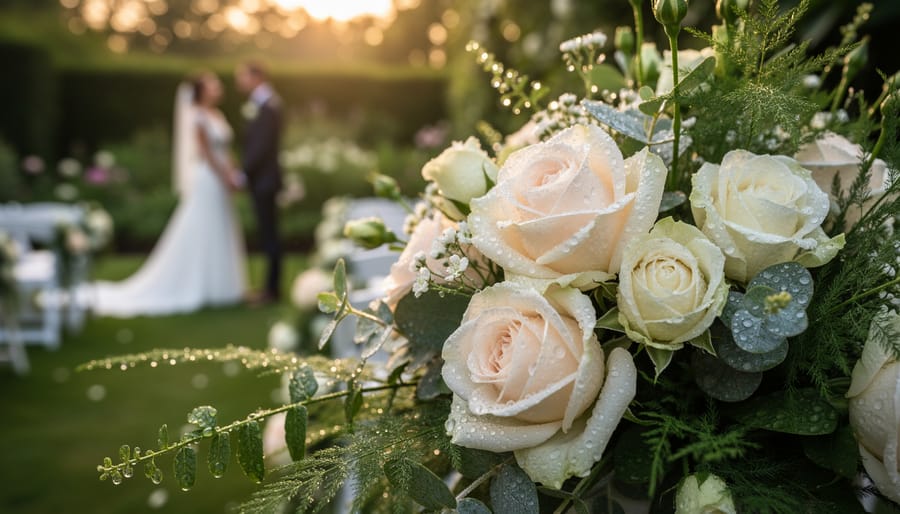
Weather doesn’t have to derail your garden wedding vision, it can elevate it into something unforgettable. Those overcast skies you worried about? They diffuse harsh sunlight into the softest, most flattering light nature offers. Rain-soaked petals glisten with extra brilliance, and mist clinging to morning gardens creates an ethereal atmosphere that feels lifted from a fairytale.
I’ve photographed ceremonies where light drizzle became part of the romance. Couples sharing umbrellas under flowering branches, raindrops catching on veils, guests laughing as they huddle closer, these moments reveal genuine connection that perfectly staged conditions never quite capture. The freshness after a storm transforms colors: greens deepen, flowers practically glow, and reflections in puddles double your photographic possibilities.
Bright sun presents different challenges in garden settings. Dappled shade under trees creates unpredictable light patterns, beautiful but tricky for consistent exposure. Position yourselves where foliage naturally filters sunlight, or embrace the dramatic contrast between bright blooms and deep shadows. Early morning and late afternoon remain your allies, when golden light slants through gardens without the harsh overhead glare of midday.
The key is preparation that respects your garden aesthetic. Clear umbrellas let weather protection become part of the frame. Elegant tents with open sides maintain garden views while providing shelter. Paths and covered walkways offer natural movement between spaces if weather shifts suddenly.
Trust your photographer to see possibilities where you might see problems. That unexpected fog rolling through your ceremony? That’s magic we can’t manufacture. Weather writes its own story into your day, making your images distinctly yours, real, unscripted, and deeply romantic in ways sunshine alone never achieves.
Composition Techniques for Garden Romance
Garden settings invite photography techniques that honor both structure and spontaneity. The key lies in recognizing what each garden offers, whether manicured symmetry or wild abundance, and adapting your approach accordingly.
Shallow depth of field becomes your best friend among blooming chaos. Shoot wide open at f/1.8 or f/2.8 to blur vibrant petals into soft bokeh behind your couple, creating separation that makes them float against colour rather than competing with it. Position subjects three to four feet from flowering bushes or vine-covered walls, then step back with a longer lens. The compressed perspective and creamy background transform a busy garden into an impressionist painting where your couple remains the sharp focal point.
Pathways guide both movement and composition. Garden walks naturally draw the eye toward vanishing points, use them. Capture couples strolling away hand-in-hand, their figures framed by overhanging branches or flower beds on either side. Shoot low from behind to emphasize the journey metaphor, or position yourself ahead where the path curves to catch them emerging into light. These in-between moments along garden corridors often feel more genuine than posed portraits.
Formal gardens with their geometric hedges and symmetrical beds reward centered compositions. Place couples directly on axis points, use the grid of plantings to create balanced foreground and background elements, and shoot straight-on to emphasize order and elegance. Wild cottage gardens demand the opposite, embrace asymmetry, shoot from angles, let trailing vines intrude from frame edges, and follow organic lines rather than imposing rigid structure.
Natural archways, arbors, and overhanging branches create ready-made frames within frames. Position your couple beneath a flowering trellis or flowering tree canopy, then compose so the natural architecture surrounds them without crowding. This technique adds depth and context, showing them within their chosen environment rather than simply in front of it. Step through these openings yourself for intimate close-ups, or shoot through foliage in the foreground for layered dimension.
Location scouting transforms good garden photography into exceptional images. Walk the venue systematically:
- Visit at the same time of day as the ceremony and portraits to observe actual light conditions and shadow patterns.
- Identify three to five distinct locations that offer different moods, one formal, one wild, one intimate, one with expansive views.
- Note sun direction and how it changes through the timeline, marking where harsh light or deep shade might create challenges.
- Photograph each potential spot from multiple angles to test backgrounds and determine which lens focal lengths work best in each space.
- Plan efficient movement between locations that respects garden pathways and keeps your couple comfortable rather than hiking endlessly.
This preparation lets you move confidently on the wedding day, knowing exactly where to take your couple when light turns golden and emotions run high. Gardens reward photographers who observe their rhythms, the way afternoon sun filters through elm leaves differently than morning light, how certain roses close by evening, where guests will naturally gather and where you’ll find quiet pockets for intimate portraits. Trust the garden’s inherent beauty and use these techniques to reveal rather than force the romance already present in petals and promises.
Intimate Garden Moments Worth Capturing
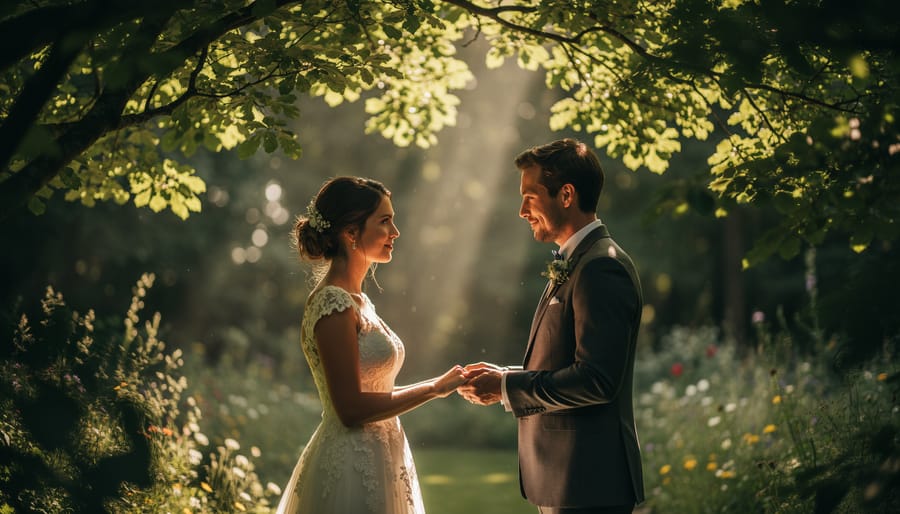
Garden weddings unfold in layers of emotion and beauty that photographers dream about capturing. These natural settings create spontaneous moments of connection that feel deeply personal yet universally romantic.
The first look takes on new dimension beneath a canopy of cherry blossoms or alongside a wall of climbing roses. Watch for the way your partner’s hand reaches out to steady themselves against a tree trunk, the genuine laugh that escapes when a petal lands on their shoulder. These unscripted reactions happen because gardens disarm us, they remind us we’re part of something larger and more enduring than our nerves.
Ceremony moments gain texture from their surroundings. Vows exchanged in a rose arbor aren’t just words, they’re promises woven into the scent of summer blooms and dappled sunlight. Your officiant’s smile as a butterfly passes between you. The way your grandmother dabs her eyes while seated among the same peonies she grew in her own garden decades ago. These details anchor your story in place and time.
Cocktail hour in a garden creates organic movement worth documenting. Guests naturally cluster near fountain edges and wander stone pathways, champagne glasses catching late afternoon light. Children discover ladybugs while adults admire your florals in their native habitat. Your bouquet resting on a weathered garden bench tells its own story about where you chose to celebrate.
The quiet moments matter most. Newlyweds stealing away to a secluded garden corner, foreheads touching, breathing in their first married moments. Your hand trailing through lavender as you walk toward your reception. These images capture not just what your garden looked like, but how it made you feel, rooted, alive, and entirely present in your love story.
Preparing Your Garden Venue for Photography
Great garden wedding photography starts weeks before your celebration, when thoughtful preparation turns a beautiful space into a storytelling canvas. The partnership between couples, photographers, and garden caretakers ensures every image captures nature’s beauty without sacrificing the garden’s health or your guests’ experience.
Schedule your garden maintenance strategically. Mowing, trimming, and deadheading should happen three to four days before your wedding, not the morning of, when fresh-cut grass creates debris and newly pruned plants look stark. This timing lets the garden recover its natural softness while keeping everything tidy. If you’re working with a botanical garden or public space, confirm their maintenance schedule aligns with your date, because some venues follow strict routines that can’t shift for events.
Walk the garden with your photographer several weeks ahead, ideally at the same time of day as your ceremony. Look critically at backgrounds, a gorgeous rose arbor might have a parking lot visible behind it from certain angles. Identify where shadows fall during your ceremony hour, which pathways photograph beautifully, and where guests might naturally gather. These scouting sessions reveal opportunities you’d miss in the planning flurry, like a hidden bench perfect for portraits or a meadow clearing that glows in late afternoon light.
Before your day arrives, use this checklist to ensure smooth collaboration:
- Visit the venue at your ceremony time to observe light and shadow patterns
- Mark or communicate preferred ceremony and portrait locations to all vendors
- Confirm watering schedules won’t create puddles or wet seating areas
- Identify backup indoor or covered spaces in case of weather changes
- Arrange garden access times for pre-ceremony portraits without guest interference
- Discuss any off-limits areas or fragile plantings with caretakers
- Plan guest pathways that protect delicate beds while enabling candid photography
Communicate clearly with garden staff about your photography needs. They’ll appreciate knowing which areas will see heavy foot traffic so they can reinforce pathways or rope off sensitive zones. Many caretakers become wonderful allies, pointing out which blooms will peak on your date or suggesting lesser-known corners that photograph beautifully.
Consider guest flow as part of your photography strategy. A cocktail hour that spreads guests throughout the garden creates organic candid opportunities, while clustering everyone in one space makes backgrounds cluttered. Subtle directional signage or stationed servers guide movement naturally without feeling controlling. Your photographer can position themselves where paths converge, capturing authentic interactions as guests discover different garden rooms and your carefully chosen landscape works its magic around them.
From Private Gardens to Botanical Treasures
Garden wedding venues across Canada span an enchanting spectrum, from your grandmother’s rose-filled backyard to meticulously curated botanical collections. Each setting brings its own photographic character and practical considerations that shape how your love story unfolds through images.
Private home gardens offer unmatched intimacy. A family estate or friend’s lovingly tended space carries emotional resonance that cameras capture beautifully, the hydrangea bush your mother planted, the pergola your partner helped build. These venues allow complete creative freedom, though you’ll want to assess sun angles throughout your celebration time and consider whether the garden scale accommodates your guest count without overwhelming the space. The personal connection makes every corner meaningful in photographs.
Historic estate gardens combine grandeur with romance. Properties like Vancouver’s VanDusen Botanical Garden or Hamilton’s Royal Botanical Gardens offer mature landscapes, established architecture like stone walls and gazebos, and curated seasonal displays. These venues typically require permits and impose restrictions on timing, setup areas, and guest numbers. The benefit? Professional garden design creates naturally balanced compositions, and venue experience means they understand photographer needs for accessing prime locations during key moments.
Community botanical gardens present structured beauty with administrative requirements. You’ll navigate permit applications, specific ceremony locations, timeline restrictions, and often higher costs. But you gain access to expertly maintained grounds, diverse plant collections for varied backdrops, and settings designed for public appreciation, which translates to photographic appeal. Some limit guest numbers to preserve delicate specimens, making these venues ideal for smaller celebrations where every frame showcases botanical artistry alongside your joy.
Garden weddings hold a particular kind of magic that no studio backdrop or ballroom chandelier can replicate. When you choose to celebrate among blooming roses, beneath ancient maples, or beside reflecting pools, you’re not just selecting a venue. You’re inviting nature itself to witness and frame your promises to each other.
The photographs from your garden celebration will carry something unrepeatable: the exact tilt of afternoon light through June leaves, the particular blush of peonies that bloomed just for your weekend, the way morning dew caught on spiderwebs along the arbor where you said “I do.” These aren’t staged details. They’re gifts from the living landscape that surrounded your most important moment.
Canada’s gardens offer extraordinary diversity, from coastal blooms that thrive in ocean mist to prairie wildflowers that sway in endless wind. Whichever regional character shapes your celebration, trust that the garden knows how to make beauty. Your photographer’s role is simply to notice and preserve it, the stolen glances between rows of lavender, your grandmother’s tears beside the fountain, the way your partner’s hand found yours during the ceremony as petals drifted past.
Let the garden do what gardens do best: grow something beautiful, authentic, and entirely yours.